
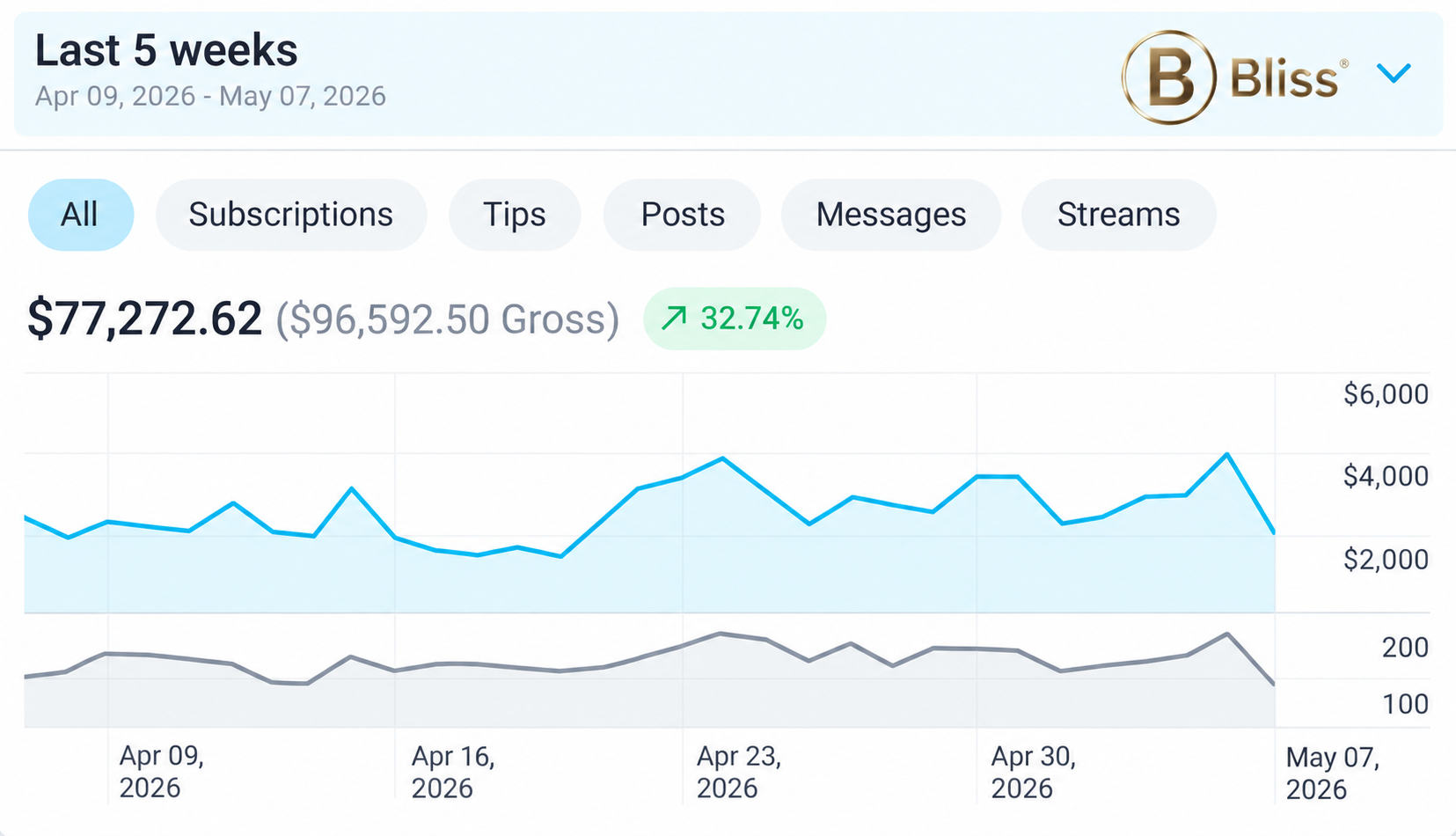
Evaluating professional management with a vague statement like “everything is going well this week” is highly unproductive. A creator should clearly understand where the money came from, which hypotheses the team tested, and why the new action plan differs from the previous one. High-quality reporting turns working with an agency into a completely transparent and understandable process.
Why Revenue Without Context Means Very Little
Total revenue is an important metric, but on its own, it does not reflect the actual quality of the work. For example, earnings may have increased sharply because of one large payment, while the subscription renewal rate actually declined. Or the opposite may happen: the numbers remain at the previous level, but the team has attracted a significant number of new fans who will generate the bulk of their revenue somewhat later. That is why all figures need to be analyzed together.
Key Metrics in a Truly Useful Report
Revenue breakdown: separate tracking of income from subscriptions, paid messages, paid broadcasts, and tips.
Audience dynamics: how many new people joined, how many renewed their subscriptions, and how many returned after a long break.
Traffic quality: not just the number of views, but actual visits and payments generated by each specific acquisition source.
PPV performance: statistics on opens, purchases, and fan reactions to different content formats and price points.
Average customer value (LTV): whether the financial value of the audience is growing, rather than simply its size.
Hypothesis testing: which new approaches were tested and what conclusions can be drawn from the results.
How Raw Statistics Become an Actionable Plan
Numbers are not collected just to create attractive tables. The analytics are used to define specific actions: change the frequency of certain posts, launch a different offer, scale the most profitable traffic channel, or abandon a strategy that wastes time. Every such test should have clearly defined timelines, objectives, and success criteria.
What Definitely Does Not Count as Transparency
A simple screenshot of the balance without any explanation, showing only the most successful days, or reports in which the creator cannot see her own metrics is a direct path to losing trust. It is also unprofessional to guarantee a specific future income level: in-depth analytics help make better decisions, but they cannot eliminate seasonality, platform updates, or changes in fan sentiment. A proper report should always answer three basic questions: what exactly happened, why we reached these conclusions, and what we will do next.
How Reporting Works in Our Team
We agree on a convenient communication format at the very beginning of the partnership. The creator receives clear summaries without unnecessary technical jargon, always has direct access to her pages, and can ask questions about any step taken by the managers. For new profiles, the main focus is on testing and collecting initial data, while accounts with an established history focus on retention, stability, and scaling results.
How to Check an Agency’s Reliability Before Starting
Always ask potential partners: which exact metrics will you be able to see, how often reports will be provided, who will explain them, and whether you will retain full access to your profile. Clear and honest answers are far more important than complex dashboards. A professional OnlyFans agency should be able to explain all of its processes in plain language before the partnership terms are finalized.