01
Stage 1 · diagnosis
Find the constraints
Review current content, audience and revenue sources to identify the highest-priority areas.
Systematizing content, audience development and revenue streams.

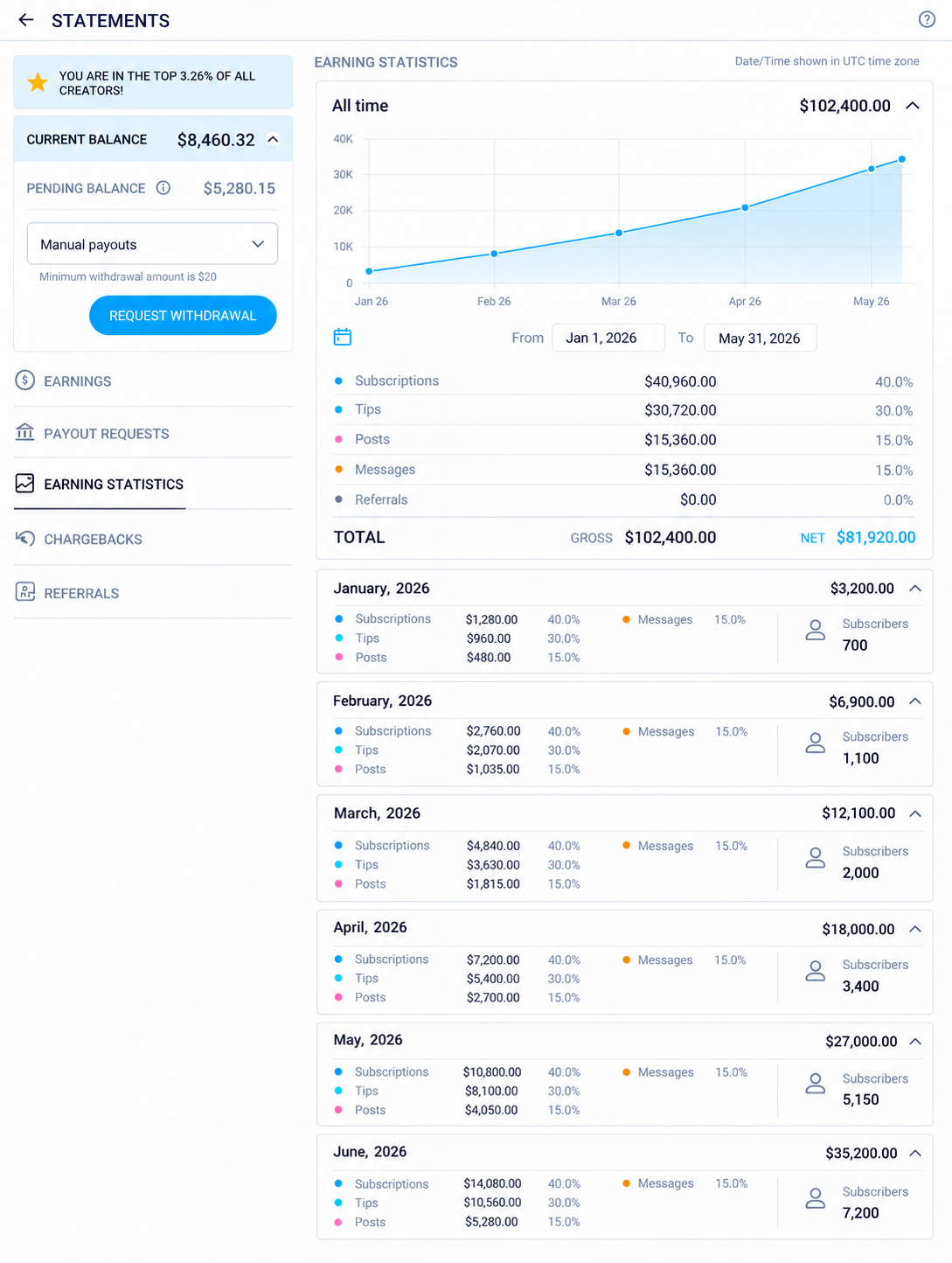
Accounting note: $102,400 in breakdown. Expenses are shown separately; the accounting basis must be verified for each case.
| Month | Revenue | Subscribers |
|---|---|---|
| M1 | $3,200 | 700 |
| M2 | $6,900 | 1,100 |
| M3 | $12,100 | 2,000 |
| M4 | $18,000 | 3,400 |
| M5 | $27,000 | 5,150 |
| M6 | $35,200 | 7,200 |
Review current content, audience and revenue sources to identify the highest-priority areas.
Select formats and workflows to develop while keeping workload manageable and quality consistent.
Compare the contribution of formats and revenue sources without confusing turnover with net results.
Evaluate changes against the key metrics and decide which approaches merit continued investment.
At the growth stage, simply increasing activity is not enough. The team needs to understand which processes create value and where constraints appear by reviewing audience trends, content activity and the monetization mix together.
The approach covers content-format analysis, publishing cadence, the subscriber journey and separate reviews of revenue sources. Any scale-up should account for workload, consistency of quality and how metrics change across the full review period.
Scaling should be assessed on more than absolute revenue. Revenue, audience, conversion, expenses and creator payouts need to be compared using a stated accounting method. This helps distinguish changes that improve the profile's economics from changes that only increase turnover.
Expenses are shown separately; the accounting basis must be verified for each case.
Expenses are shown separately; the accounting basis must be verified for each case.
Results depend on the creator, content, market and other factors. Examples are not a guarantee of earnings.