01
Stage 1 · preparation
Positioning and objectives
Define the audience, profile role, content pillars and metrics used to review progress.
An approach to positioning, a content system and audience development at the start.

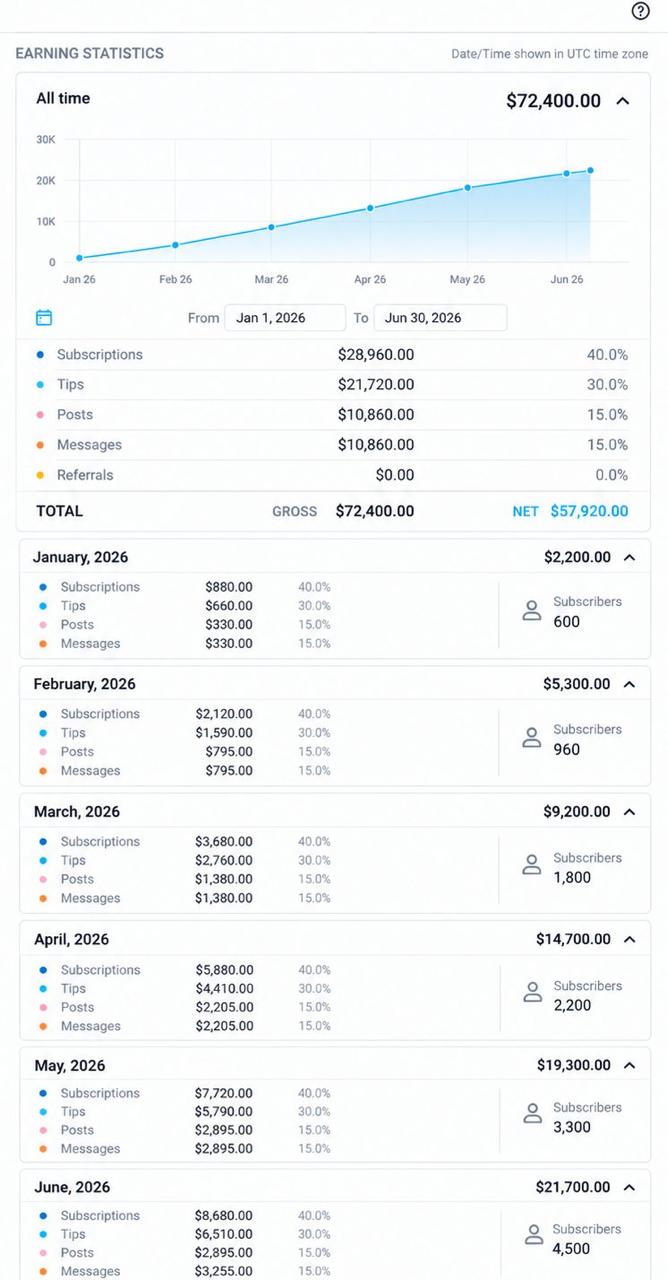
Accounting note: $73 in breakdown. Expenses are shown separately; the accounting basis must be verified for each case.
| Month | Revenue | Subscribers |
|---|---|---|
| M1 | $2,200 | 600 |
| M2 | $5,300 | 960 |
| M3 | $9,200 | 1,800 |
| M4 | $14,700 | 2,200 |
| M5 | $19,300 | 3,300 |
| M6 | $21,700 | 4,500 |
Define the audience, profile role, content pillars and metrics used to review progress.
Organize the publishing calendar, content formats and a repeatable planning and review cycle.
Compare traffic sources and audience responses, document observations and test hypotheses.
Revisit priorities using the combined metrics and retain only conclusions supported by data.
At the start, the priority is to establish clear profile positioning and turn disconnected tasks into a consistent process. Content formats, audience expectations and the criteria used to review progress need to work together.
The operating model combines a content plan, regular review of audience responses, acquisition-channel testing and a separate focus on subscriber retention. Decisions should be informed by the full review period rather than a single peak value.
A project like this should be assessed over an agreed period using monthly revenue, audience changes, expenses and creator payout. Financial figures must be read alongside a clearly stated accounting basis so account turnover is not confused with net income.
Expenses are shown separately; the accounting basis must be verified for each case.
Expenses are shown separately; the accounting basis must be verified for each case.
Results depend on the creator, content, market and other factors. Examples are not a guarantee of earnings.